A visual map of every taste you'll find in Ugandan coffee, from Bugisu's dark chocolate and red berry to Rwenzori's stone fruit and jasmine. Built for cuppers, buyers, and roasters who need to understand Uganda's flavour landscape at a glance.
Coffee flavour wheels are standardised tasting tools used by Q Graders and specialty buyers worldwide. This one maps Uganda's specific terroir-driven profiles. Inner ring: broad flavour families. Outer ring: specific tasting notes found in Ugandan Arabica and Robusta.
Each category appears in specific Ugandan growing regions and grades. The notes below are validated against Uganda Coffee Development Authority cupping data and specialty buyer feedback.

Uganda's high-altitude Arabica regions produce pronounced fruity notes. Bugisu AA delivers red berry and blackcurrant. Rwenzori Arabica leans toward stone fruit (peach, apricot). West Nile Arabica shows dried fruit and raisin. These notes are most prominent in washed Arabica processed at 1,500m or higher.

Floral notes are the hallmark of Uganda's specialty Arabica. Rwenzori microlots frequently cupping with jasmine and lavender. Bugisu Arabica shows honey sweetness when natural processed. These notes appear in coffees scoring 84+ on the SCA scale and command premium prices from Japanese and Nordic buyers.
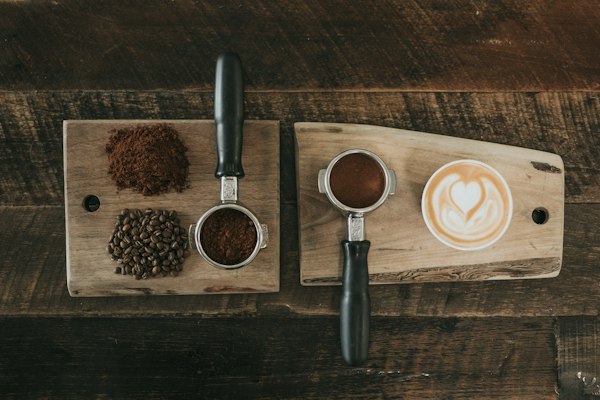
Uganda's Robusta grades are famous for deep chocolate and nutty profiles, which is why Italy buys 32% of Uganda's exports for espresso blending. Robusta Screen 18 delivers dark chocolate, cocoa, and roasted almond. Bugisu Arabica also shows dark chocolate alongside its fruity notes, creating a complex cup that works for both filter and espresso.

Uganda's volcanic soils produce naturally sweet coffees. Drugar Arabica (dry-processed) develops caramel and brown sugar notes that appeal to Arabic coffee markets in Saudi Arabia and the Gulf. Robusta Screen 15 shows molasses sweetness when medium-roasted. These sweetness notes balance the body and acidity for a smooth, approachable cup.

Ugandan coffee from lower-altitude Robusta zones and some Arabica microclimates develops warm spice notes. These are subtle, not dominant: cinnamon and clove in Bugisu natural Arabica, black pepper in West Nile Robusta. Spicy notes are most pronounced in darker roasts and natural-processed coffees, making them popular with Middle Eastern and Turkish buyers.

Uganda's Robusta grades carry earthy undertones that add complexity without bitterness when properly processed. Cedar and tobacco notes appear in Kiboko (dried cherry) and FAQ grades, while herbal notes (black tea, lemongrass) show up in washed Robusta. These earthy notes are a natural feature of Uganda's volcanic soil, not a processing defect.
Altitude, soil, and processing method interact to create each region's signature cup. Uganda's 5 coffee regions produce distinctly different profiles.
Uganda's flagship Arabica region. Bugisu AA cups at 83-86 points with dark chocolate, red berry, and citrus acidity. Full body with a clean, wine-like finish. The volcanic slopes of Mt. Elgon produce some of Africa's best-value specialty Arabica. Preferred by Italian espresso roasters (for body) and Japanese specialty buyers (for cupping score).
Uganda's emerging specialty star. Rwenzori Arabica delivers stone fruit, jasmine florals, and bright citrus acidity. Lighter body than Bugisu but more complex aromatics. Growing demand from Nordic roasters who prefer clean, high-acidity African coffees for light-roast filter brewing. Microlots from this region command Uganda's highest FOB prices.
Uganda's Robusta heartland transitioning to specialty Arabica. West Nile Arabica shows dried fruit, honey, and almond with mild acidity. Smooth, approachable cups that work well in blends. The region's Drugar natural Arabica is popular with Sudanese and Middle Eastern buyers who prefer full-bodied, low-acidity coffee for traditional preparation.
Central Uganda produces the bulk of Uganda's Robusta (Nganda and Erecta varieties). Cocoa, brown sugar sweetness, and herbal undertones. Kisoro, in the southwest, is an emerging Arabica zone with volcanic soils similar to neighbouring Rwanda. Early cupping scores show honey, black tea, and stone fruit, suggesting strong specialty potential as production scales.
Each UCDA export grade has a characteristic flavour profile that determines its target market and buyer type. Use this table to match grades to your roasting or blending requirements.
| Grade | Type | Flavour Notes | Body | Acidity | Best For |
|---|---|---|---|---|---|
| Bugisu AA | Arabica | Dark chocolate, red berry, citrus | Full | Bright | Filter, espresso, single-origin |
| Bugisu A | Arabica | Chocolate, berry, mild citrus | Full | Medium | Espresso blends, filter |
| Bugisu PB | Arabica | Intense berry, wine-like, floral | Medium | High | Microlot, competition-grade |
| Wugar | Arabica | Stone fruit, caramel, mild spice | Medium | Medium | Blends, commercial Arabica |
| Drugar | Arabica | Dried fruit, brown sugar, cinnamon | Full | Low | Arabic coffee, dark roast |
| Robusta SC 18 | Robusta | Dark chocolate, nutty, earthy | Heavy | Low | Espresso blends, Italian roast |
| Robusta SC 15 | Robusta | Cocoa, molasses, cedar | Heavy | Low | Commercial blends, instant |
| Robusta SC 12 | Robusta | Earthy, tobacco, herbal | Medium | Low | Instant coffee, blending filler |
Check daily UCDA prices for every grade on this wheel. Track price movements, compare Arabica-to-Robusta spreads, and plan your next purchase with real data.
View Live Coffee Prices →