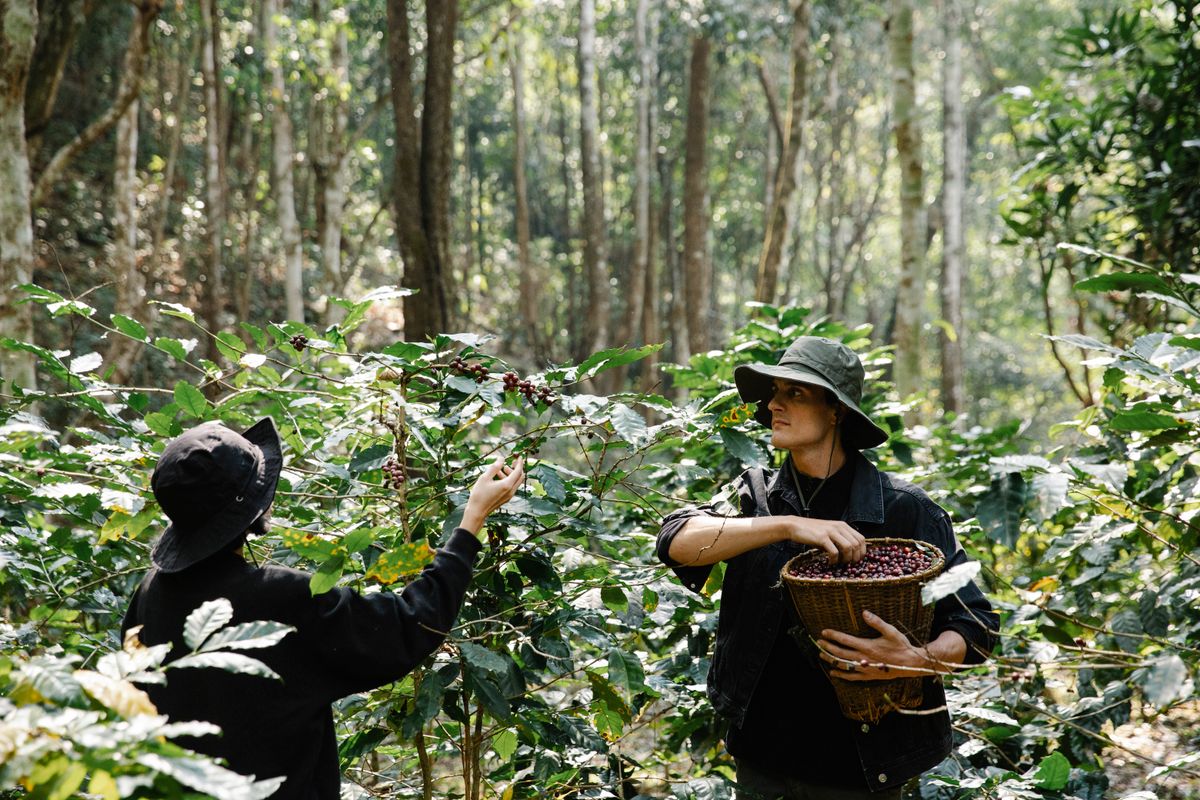
Complete Guide
Uganda Coffee Growing Regions
From the misty slopes of Mount Elgon to the Rwenzori peaks - discover the terroir, varieties, and flavour profiles that make Uganda one of Africa's most diverse coffee origins.
From the misty slopes of Mount Elgon to the Rwenzori peaks - discover the terroir, varieties, and flavour profiles that make Uganda one of Africa's most diverse coffee origins.
Uganda is one of the world's most exciting coffee origins - the only country on the continent where both Arabica and Robusta grow natively and commercially at scale. With volcanic soils, high altitudes, and a climate perfectly suited to coffee cultivation, Uganda produces some of the most distinctive and complex coffees on the market.
Uganda's coffee sector supports an estimated 1.7 million households across the value chain. The country's unique geography - straddling the equator yet benefiting from high elevation - creates ideal conditions for both washed and natural-process coffees. From bright, berry-forward Arabicas in the east to bold, full-bodied Robustas in the central basin, every region tells a distinct story of terroir. Explore our coffee varieties guide for detailed profiles of SL14, SL28, and other cultivars grown across these regions.
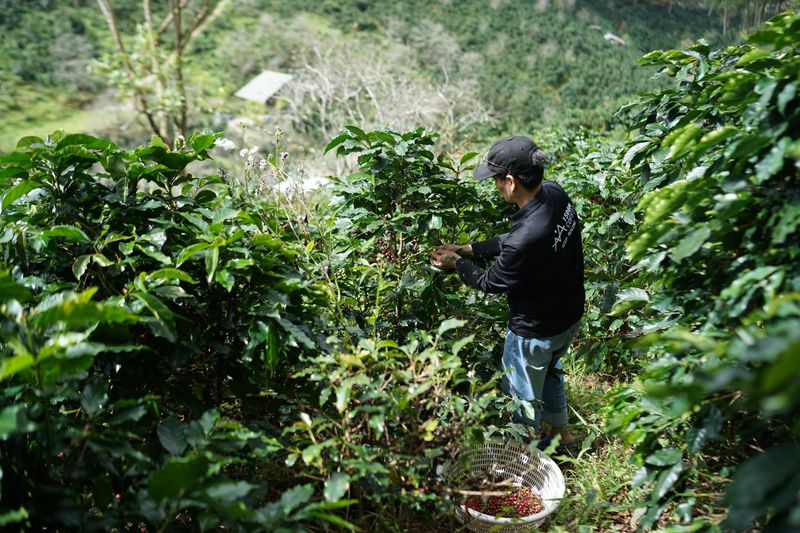
Known for bright acidity, berry notes, and Uganda's most famous washed Arabicas
Mount Elgon is an extinct shield volcano straddling the Uganda-Kenya border. Its fertile volcanic slopes give rise to the Bugisu region - widely regarded as the birthplace of Uganda's specialty coffee reputation. Bugisu AA and Bugisu AB grades are among the most sought-after African coffees, prized for their clarity, complexity, and wine-like acidity. Most coffee here is grown by smallholder farmers organised into cooperatives, many of them Fair Trade and organic certified.
Bugisi coffees are predominantly washed (wet-processed), which highlights their clean, vibrant acidity and pronounced fruit characteristics. The SL14 and SL28 varieties - developed in Kenya but thriving on Elgon's volcanic soils - contribute to the region's signature berry-forward profile. The combination of high altitude, consistent rainfall (1,500 - 2,000 mm annually), and shade-grown cultivation under banana trees and indigenous forest canopy yields beans with exceptional density and flavour development. Many exporters consider Bugisu the benchmark for East African specialty Arabica. For a deeper look at the cultivars grown here, visit our varieties page. Read the full Bugisu guide →
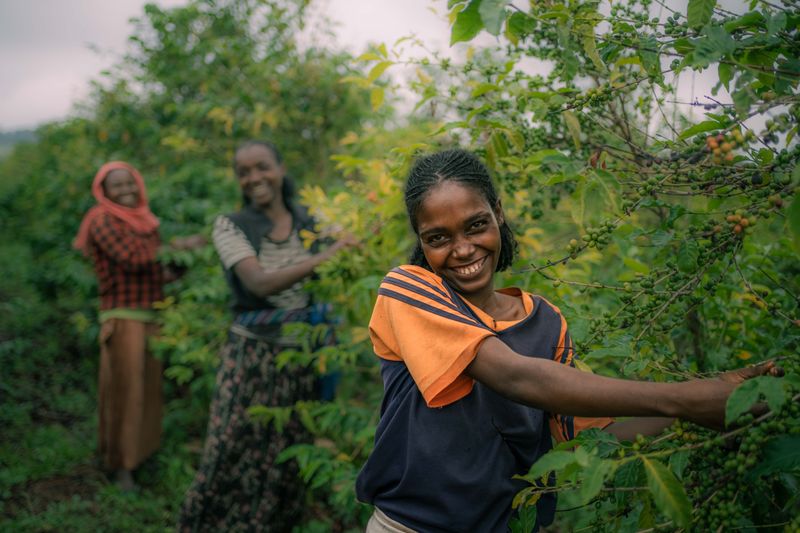
Citrus, chocolate, and the purest washed Arabica in the west
The Rwenzori Mountains - often called the "Mountains of the Moon" - rise dramatically from the Albertine Rift Valley, with peaks permanently capped by snow and glaciers. Coffee is cultivated on the lower and mid-elevation slopes (typically up to 2,200 m), where the cool climate, misty conditions, and well-drained volcanic soils create ideal conditions for slow bean maturation and exceptional flavour development. Rwenzori coffee has gained international recognition for its balanced cup, with a clean acidity and pronounced sweetness.
Rwenzori coffees are almost exclusively washed-process Arabica, reflecting the region's abundant water supply from glacial melt and mountain springs. The cooler temperatures at higher elevations slow cherry ripening, producing denser beans with more developed sugars. Many growers in this region are transitioning to organic and Rainforest Alliance certification, responding to growing demand from European and North American specialty roasters. The Kasese and Bundibugyo districts are the heart of Rwenzori coffee production. Buyers interested in sourcing Rwenzori lots should consult our buyer's guide for procurement best practices. Read the full Rwenzori guide →
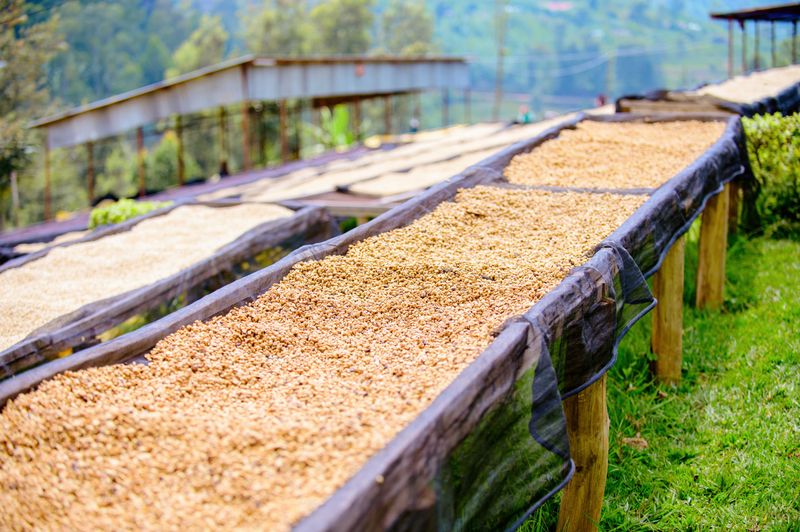
One of the few regions producing both high-quality Arabica and Robusta
The West Nile region, encompassing the districts of Arua, Yumbe, Moyo, and Adjumani, sits at a lower elevation than Uganda's eastern and western highlands. Its warm climate and well-defined wet and dry seasons make it suitable for both Arabica (at higher pockets) and Robusta cultivation. West Nile is one of Uganda's emerging coffee frontiers, with significant investment in quality improvement, washing stations, and farmer training programmes. The region's Arabica tends to be bold and earthy, while its Robusta is prized for its heavy body and low acidity - ideal for espresso blends.
West Nile's coffee sector is undergoing a transformation. With support from organisations like the Uganda Coffee Development Authority (UCDA) and international development partners, farmers are adopting better pruning, mulching, and post-harvest handling practices. The region's Robusta - representing roughly 40% of its total output - is increasingly being marketed to Italian and German roasters for espresso blends, while its Arabica finds a home in specialty markets for those seeking bold, chocolate-forward cups at accessible prices. The dual nature of West Nile's production makes it a uniquely versatile origin for buyers who want both species from a single region. Read the full West Nile guide →

Where Uganda's native Robusta thrives in the warm, low-elevation equatorial climate
Central Uganda, including the districts of Mukono, Kayunga, Luwero, Masaka, and the shores of Lake Victoria, is the historic homeland of Uganda's Robusta coffee. Coffea canephora has grown wild here for centuries; in fact, the Robusta species was first identified botanically in the Lake Victoria basin. The region's low elevation, high temperatures, and bimodal rainfall pattern are perfectly suited to Robusta, which thrives where Arabica cannot. Central Uganda produces the vast majority of Uganda's Robusta export volume, and quality has risen dramatically thanks to improved agronomy and processing.
Uganda is the second-largest Robusta producer in Africa after Côte d'Ivoire, and the Lake Victoria basin is the engine of that production. The region's Robusta is increasingly being processed as "specialty-grade Robusta" - using washed and honey methods previously reserved for Arabica - yielding cups with surprising sweetness, clean mouthfeel, and notes of peanut, dark chocolate, and toasted grain. For espresso roasters, Central Uganda's Robusta offers exceptional crema and body at a fraction of the cost of high-altitude Arabica. The interplay between the two harvest peaks (May - August and November - January) ensures year-round availability. Check our buyer's guide for tips on sourcing and cupping specialty Robusta. Read the full Central Uganda guide →
High-altitude Arabica with extraordinary potential, still largely undiscovered
The Kisoro region, nestled in the far southwestern corner of Uganda near the borders of Rwanda and the Democratic Republic of Congo, is one of the country's most exciting emerging coffee origins. With altitudes exceeding 2,000 m in many areas, Kisoro's climate closely resembles that of Rwanda's northern and western provinces. Coffee here is almost exclusively smallholder-grown on tiny plots (0.2 - 0.5 hectares on average), intercropped with bananas, beans, and other food crops. The region has attracted attention from specialty buyers in recent years for its clean, complex, and intensely sweet cups.
Kisoro's coffee story is still being written. Until the mid-2010s, most of the region's cherry was sold through informal channels and blended into commercial-grade lots. Today, with investment from the Uganda Coffee Development Authority, the International Coffee Organization, and private exporters, Kisoro is building a reputation for quality that rivals Rwanda's best. The volcanic soils of the Virunga mountain range - shared with Rwanda and DRC - give the coffee a distinctive minerality and floral lift. Buyers willing to invest in long-term relationships with Kisoro cooperatives can secure extraordinary lots at prices well below those of neighbouring Rwandan counterparts. For more on the varieties performing well at these altitudes, see our varieties guide. Read the full Kisoro guide →
Use this quick-reference table to compare altitude, varieties, cup profiles, and harvest seasons across all major growing regions.
| Region | Altitude (m) | Soil | Varieties | Cup Profile | Harvest | Species |
|---|---|---|---|---|---|---|
| Bugisu / Mt. Elgon | 1,500 - 2,300 | Volcanic loam | SL14, SL28, Bourbon | Berry, citrus, floral, winey | Oct - Mar | Arabica |
| Rwenzori | 1,600 - 2,200 | Volcanic / alluvial | SL14, SL28, Blue Mountain | Citrus, milk chocolate, stone fruit | Sep - Jan | Arabica |
| West Nile | 1,000 - 1,500 | Ferralitic sandy loam | SL14, Nganda, Erecta | Dark chocolate, earthy, bold | Oct - Feb / Jun - Aug | Arabica + Robusta |
| Central / L. Victoria | 800 - 1,200 | Ferralitic clay loam | Nganda, Erecta, KR1 | Heavy body, peanut, cocoa | May - Aug / Nov - Jan | Robusta |
| Southwest / Kisoro | 1,500 - 2,200+ | Volcanic, humus-rich | SL14, Bourbon, Jackson | Floral, black tea, red currant | Mar - Jun / Oct - Dec | Arabica |
Note: Harvest seasons can shift by 2 - 4 weeks depending on microclimate, elevation, and annual rainfall patterns. All regions benefit from bimodal rainfall, with two distinct harvest windows in most areas. For live pricing and availability across regions, visit Uganda Coffee Prices.
Whether you're a roaster looking for your next single-origin lot or a buyer exploring Uganda's diverse coffee regions, we have the resources to help you make informed decisions.
Also read our Buyer's Guide for procurement best practices, shipping logistics, and certification requirements.