☕ Processing Guide
Uganda Coffee Processing Methods
How washed, natural, and honey processing transform cherry into export-ready green bean - and why it matters for your cup.

How washed, natural, and honey processing transform cherry into export-ready green bean - and why it matters for your cup.
The single most influential post-harvest decision a farmer makes is how to process the cherry. It shapes everything - flavor, body, acidity, price, and marketability.
Coffee processing is the bridge between harvest and export. Once ripe cherry is picked - by hand, as it always is in Uganda's smallholder systems - it must be transformed into stable, dry green bean within hours or days. The method chosen determines which flavors survive, which compounds develop during drying, and ultimately what a roaster finds in the sample tray.
In Uganda, three primary methods dominate: washed (wet), natural (dry), and the increasingly important honey (semi-washed). Each method is a deliberate choice, influenced by water availability, infrastructure, market demand, and the unique characteristics of Uganda's coffee-growing regions.
Uganda is among the few origins in Africa where all three methods are actively practiced at commercial scale. This diversity is a strategic advantage - it allows Ugandan exporters to serve multiple market segments, from the clean, bright cups demanded by Scandinavian roasters to the fruit-forward naturals prized by specialty buyers in the United States and Asia.
This guide explains each method in detail: how it works, why it produces the flavors it does, where it fits in Uganda's coffee landscape, and how it affects your sourcing decisions.

The most widely practiced method in Uganda and the foundation of the country's specialty coffee reputation.
Washed processing removes the cherry's outer skin (exocarp) and mucilage before drying, leaving only the parchment-covered bean. The process follows five distinct stages:

Cup characteristics: Clean, bright, complex acidity. Medium body. Notes of citrus (lemon, grapefruit), stone fruit (peach, apricot), floral undertones, and cocoa. The cleanest expression of terroir.
Why it's common in Uganda: Uganda's mountainous coffee regions - Mt. Elgon, Rwenzori, and the southwestern highlands - have abundant water sources and established washing station infrastructure. The Uganda Coffee Development Authority (UCDA) has actively promoted wet processing since the 1990s as a path to higher cup scores and export premiums. An estimated 65 - 70% of Uganda's specialty-grade Arabica is washed-processed.
The traditional method - as old as coffee cultivation itself - and one experiencing a major resurgence in Uganda's specialty sector.
Natural processing dries the whole cherry - skin, pulp, mucilage, and parchment - together. The bean absorbs sugars and compounds from the fruit during the weeks-long drying process, producing a markedly different flavor profile.
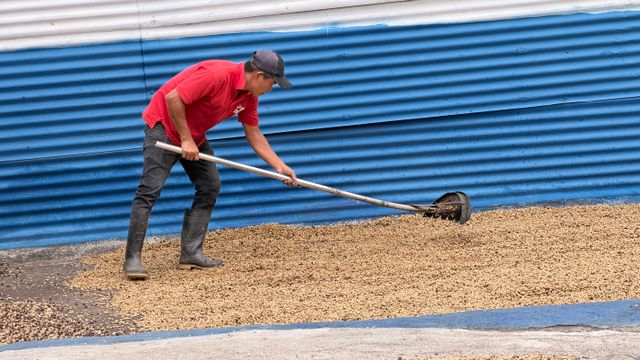
Cup characteristics: Heavy body, low acidity, intense sweetness. Ripe fruit flavors: strawberry, blueberry, tropical fruit, and winey notes. The fruit sugars caramelize during drying, creating complex, dessert-like cups. Often described as "fruit-forward."
Traditional role in Uganda: Natural processing is the oldest method used in Uganda. Before washing stations were built, virtually all Ugandan coffee was sun-dried as whole cherry and hulled by hand. Today, natural processing accounts for roughly 20 - 25% of Uganda's Arabica production and an even higher share of Robusta. It is especially common in areas with limited water infrastructure and among smaller cooperatives that lack access to washing stations. The growing international demand for naturals - driven by specialty roasters seeking fruit-forward profiles - has reinvigorated interest in this method. Premium naturals from Uganda now command comparable prices to washed lots in specialty markets.
The sweet spot between washed and natural - and one of the most exciting developments in Uganda's specialty coffee sector.
Honey processing is a hybrid method: the cherry skin is removed (like washed), but some or all of the sticky mucilage is left on the bean during drying. The mucilage - which is sweet, honey-like in texture and color - caramelizes on the bean, producing unique flavor results.
Experimental in Uganda: Honey processing is still relatively new to Uganda compared to washed and natural methods. Early adopters - including the Bukonzo Joint Cooperative in Rwenzori and select washing stations in Mt. Elgon - began experimenting around 2018. The results have been promising: honey-processed Ugandan coffees have scored 86+ points in international cuppings and have attracted interest from Nordic and Australian roasters seeking differentiated origins. Adoption is growing, particularly among specialty-focused cooperatives that have invested in training and controlled drying infrastructure.
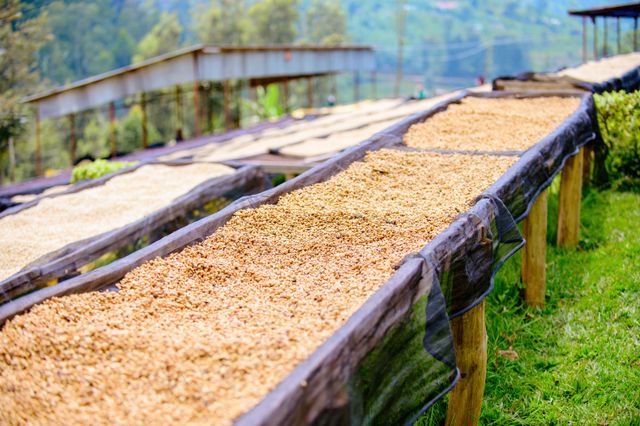
Cup characteristics: Medium body, balanced acidity, pronounced sweetness. The mucilage caramelization adds toffee, caramel, and stone fruit notes. Less fruity than naturals, sweeter than washed. Often described as "syrupy" with a creamy mouthfeel.
The amount of mucilage retained during drying determines the honey level - and directly influences the final cup profile.
Skin removed, minimal mucilage left. Fast drying (12 - 15 days). Closest to a washed coffee in cup profile - clean but with added sweetness and body. Gentle fruit notes. The most approachable honey for first-time experiments.
Most common honey level in Uganda. Moderate mucilage layer. Dries in 15 - 20 days with regular turning. Pronounced sweetness, medium body, stone fruit and caramel notes. Considered the sweet spot for balancing complexity and risk.
Maximum mucilage. Very slow drying (20 - 25+ days). High risk of over-fermentation or mold. Intense, winey sweetness. Dark fruit and molasses notes. Rare in Uganda - only produced by the most experienced washing stations with meticulous drying protocols.
Processing isn't just about flavor - it's a strategic market decision that directly affects pricing, buyer segments, and export positioning.
Washed-processed Ugandan Arabica (Bugisu AA, A grades) commands the highest base prices, typically $2.50 - 4.00/lb FOB depending on cup score and certification. Specialty-grade washed lots trade at a 30 - 60% premium over commercial grade. Buyers in Europe and Japan pay top dollar for washed Ugandan coffee because of its clean, classical profile.
Premium naturals from Uganda trade at $2.80 - 4.50/lb FOB for specialty-grade lots. The ceiling is higher than washed because naturals appeal to a smaller but more dedicated buyer segment - specialty roasters looking for differentiation. A 87+ natural from Rwenzori can achieve double the price of a standard washed lot. The global trend toward fruit-forward profiles continues to push prices upward.
Honey-processed Ugandan coffee is the highest-priced method per pound, typically $3.50 - 6.00/lb FOB for specialty-grade lots. The premium reflects higher production costs (labor-intensive drying, skilled workers, higher defect risk) and limited supply. Honey lots are almost entirely sold through direct trade relationships with specialty roasters. The market is small but growing rapidly - year-over-year demand increased by an estimated 35% in 2024.
For Ugandan exporters and cooperatives, processing choice is a deliberate market-positioning decision:
Washed is the safe, established path - it sells into the largest buyer pool and requires the most developed infrastructure. Washed lots are the default for commodity and mainstream specialty buyers.
Natural is the differentiated play - it attracts progressive roasters willing to pay premiums for unique flavor profiles. Naturals also use less water, which is increasingly important for sustainability certifications.
Honey is the high-risk, high-reward option - limited volumes, maximum buyer engagement, and the potential to establish a premium origin reputation. For Uganda, honey processing represents a strategic opportunity to differentiate from neighboring origins (Kenya, Ethiopia) that primarily produce washed or natural coffee.
Typical FOB prices for Ugandan specialty Arabica (2025):
Processing methods in Uganda are shaped by geography, water availability, infrastructure, and market orientation. Here is how each region approaches the processing decision.
The heartland of Ugandan washed Arabica. 15+ washing stations operate on the mountain's slopes. Abundant spring water and established infrastructure make washed processing the default. A small number of experimental honey lots are being developed by specialty-focused cooperatives. Natural processing is rare here - the region's high humidity makes it risky.
Rwenzori's higher altitudes and cooler temperatures are ideal for washed processing, producing bright, complex cups. The Bukonzo Joint Cooperative has pioneered honey and natural processing here, achieving international recognition. The region's microclimate - with distinct wet and dry seasons - allows for controlled natural drying.
West Nile's hotter, drier climate and lower altitude favor natural processing. The region has fewer washing stations, and much of its Arabica is still sun-dried as whole cherry. West Nile naturals tend to be more rustic and fruit-forward compared to the cleaner profiles from Mt. Elgon. An area of growing interest for specialty buyers seeking bold, fruit-driven cups.
Masaka is Uganda's Robusta heartland. Nearly all Robusta is natural-processed - sun-dried as whole cherry and hulled mechanically. The smaller Arabica lots in the region are typically washed at centralized stations. Masaka is also a center for certified organic production, which pairs well with natural processing (no water discharge concerns).
The southwestern highlands - particularly the Kigezi region around Kabale - are dominated by washed-processed Arabica. The cool climate, high altitude (1,500 - 2,200m), and established washing stations produce some of Uganda's cleanest, most acidic coffees. Natural processing is minimal due to the region's prolonged rainy seasons.
Regardless of processing method, every export lot must pass through rigorous quality control checkpoints to ensure it meets buyer specifications and UCDA grading standards.
Uganda's coffee quality control system operates at three levels: the washing station or processing facility, the dry mill, and the UCDA (Uganda Coffee Development Authority) grading and certification system.
At the washing station: Cherry is float-graded on arrival. Floaters (low-density cherries with defects) are separated from sinkers (high-density, fully ripe cherries). Hand sorting on the receiving table removes visible defects: over-ripe, under-ripe, insect-damaged, and double cherries. This is the most critical quality control point - upstream sorting prevents defects from compounding during processing.
During processing: For washed coffee, density grading in washing channels separates the highest quality beans (which sink first) from lighter beans that float downstream. For naturals, workers hand-sort the drying cherry to remove any beans showing signs of mold, uneven drying, or insect damage. For honey process, frequent turning doubles as quality monitoring - workers inspect every bed multiple times daily.
At the dry mill: Parchment coffee (or dried cherry for naturals) is hulled, polished, and passed through a series of gravity tables and electronic color sorters. These machines remove defects based on density, size, and color. The final step is hand-sorting on conveyor belts - skilled sorters remove any remaining defects that machines miss. A typical specialty-grade lot in Uganda goes through 3 - 4 sorting passes before it is bagged for export.
UCDA grading: Every export lot is graded by a UCDA-licensed grader and assigned a screen size designation (AA: 17/18, A: 15/16, B: 14/15, etc.) and a defect count. Specialty-grade exports require a defect count below 15 per 350g sample. The final grade determines the minimum export price and market positioning.
Cherry density separation in water channels at reception
Manual defect removal at reception, drying, and final bagging
Density-based defect removal at the dry mill
Electronic optical sorters detect and eject discolored beans
Primary defects (1 count each): Full black, full sour, dried cherry/parchment, fungus damage, severe insect damage, foreign matter.
Secondary defects (2 - 5 count each): Partial black/sour, broken beans, shell, immature beans, slight insect damage.
Specialty grade requires ≤15 total defects per 350g sample. Commercial grade allows up to 45 - 60 defects depending on destination.
Understand which processing methods dominate each growing region - and use real-time market data to make informed sourcing decisions.